CONVICTION / 01
Workflow systems, not features
Design the clinical workflow before the UI. Help that lives outside the workflow forces a context-switch, and clinicians under pressure won't take it.
Five years shipping healthcare SaaS from 0→1 and operating it at enterprise scale, where the win is never the demo — it's adoption, compliance, and the edge cases underneath.
Four convictions that show up in almost everything I ship — the reason my products get adopted instead of just launched.
Design the clinical workflow before the UI. Help that lives outside the workflow forces a context-switch, and clinicians under pressure won't take it.
A brilliant feature nobody adopts is a failed feature. I optimize for time saved and clicks removed, not for the length of a release note.
Use AI where it creates measurable leverage — search, answers, content creation — and treat accuracy, safety, and trust as first-class product responsibilities.
Prove value with analytics — ticket deflection, completion, revenue — not activity. Config over code, so the next customer onboards without another build.
A Just-in-Time AI training and support system for EHR users that lives inside the clinician's workflow. I led it from concept to launch in six months and scaled it to ~80,000 providers.
Content can be excellent and still fail if a clinician has to leave the patient chart to find it. So I reframed the goal from producing more training to building an in-workflow enablement system: discoverable help at the moment of need, self-service that scales without adding headcount.
That meant going deep on Epic integration via SSO and SMART on FHIR, so clinicians reach help without a separate login or a workflow break. The trade was deliberate: I gave up a faster generic rollout across environments to win higher adoption through workflow-native access — the metric that actually mattered.
 Product interface preview unavailable
Accessible inside Epic via SSO + SMART on FHIR — help arrives where clinicians already work.
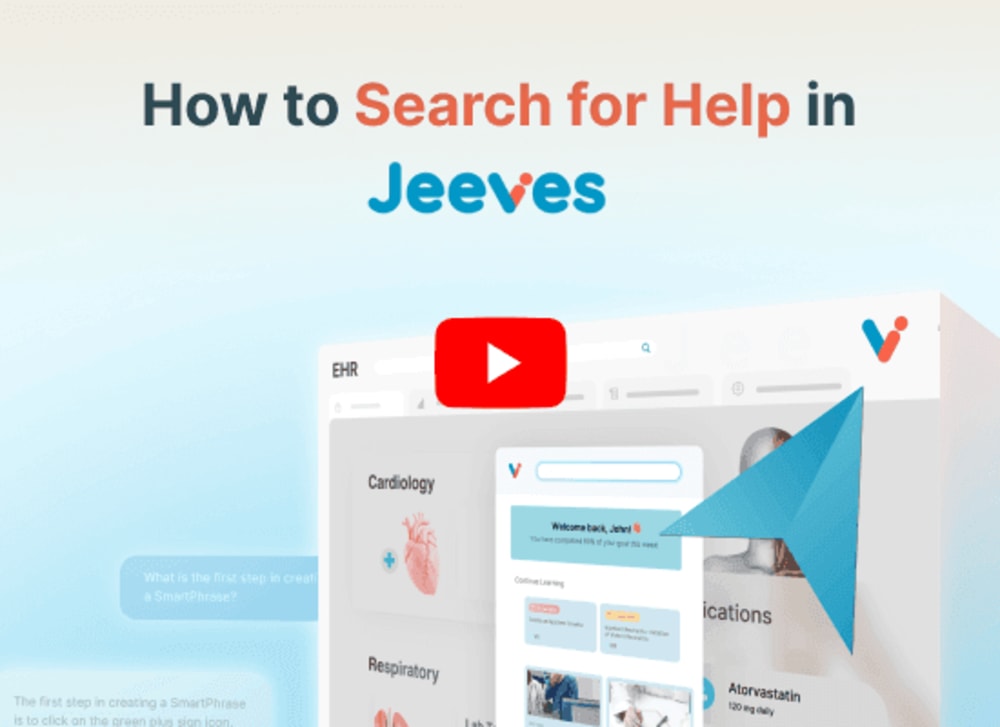 Product interface preview unavailable
Natural-language search surfaces the exact bite-sized video or tip sheet — no keyword guessing, no leaving the chart.
 Product interface preview unavailable
An LLM bot grounded in the organization's content library answers instantly, then hands off to a live agent for complex cases.
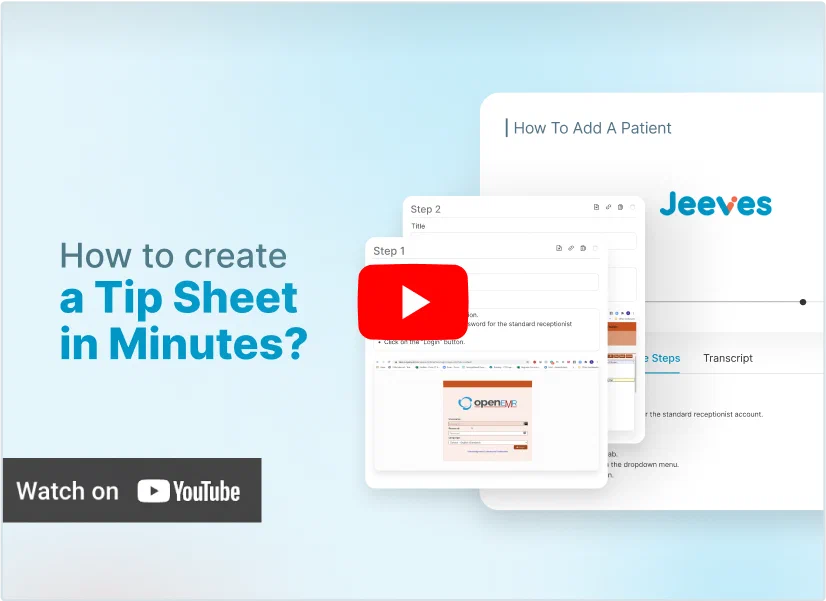 Product interface preview unavailable
An AI toolbox — tip-sheet generation from video, screen recorder, AI narration, image editor — lets teams create more with less effort.
 Product interface preview unavailable
A review-comment-approve workflow with reminders and outdated-content flags — because trust is non-negotiable in clinical settings.
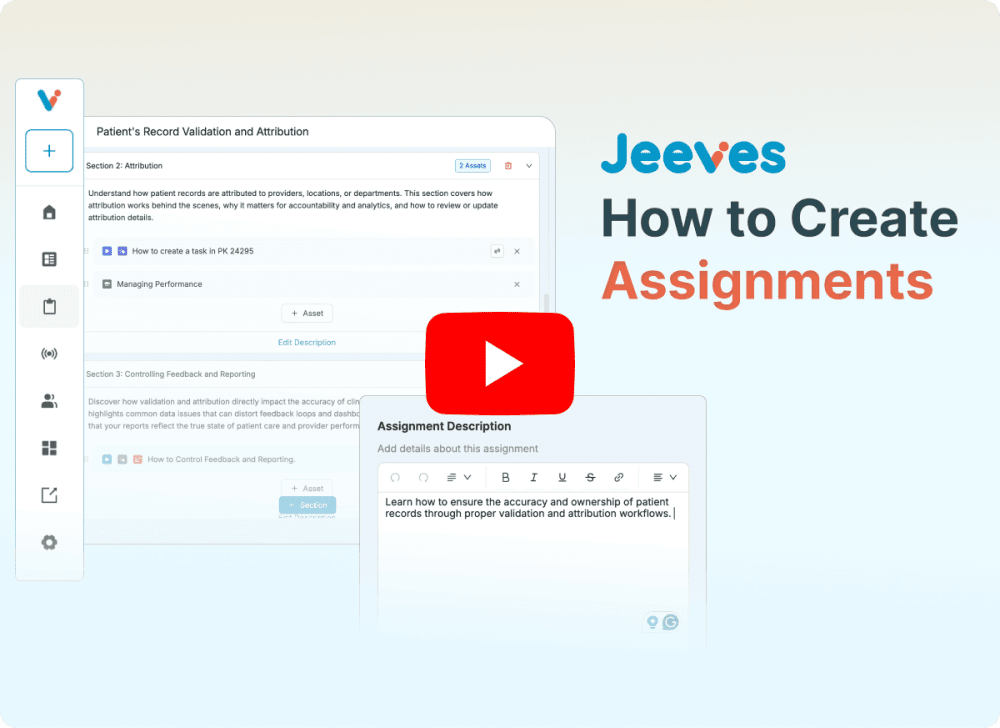 Product interface preview unavailable
Assignments and in-workflow notifications turn EHR upgrades from a scramble into structured, tracked readiness.
Value was measured, not assumed: I stood up analytics on Matomo early, then migrated to Google Analytics as tracking maturity and scale demanded it.
| Decision | Risk accepted | Why it was worth it |
|---|---|---|
| Deep Epic embedding (SMART on FHIR SSO) | Integration complexity | Adoption comes from workflow proximity |
| AI self-service via search + bot | Accuracy and trust expectations | Scale support without scaling headcount |
| Content automation (tip sheets, narration) | Change management for trainers | Cut creation cost, raise output speed |
| Governance workflow | Operational overhead | Prevent outdated, unsafe guidance |
“Jeeves made it easy for the Informatics team to fully own their content.”
As Product Owner, I own strategy and execution for enterprise prior-authorization capabilities serving large US healthcare payers — configurable platform logic, workflow automation, and API-enabled integrations with third-party payer systems.
Highmark had to transmit authorization reason codes outbound over FHIR, but internal codes mapped many-to-one onto the standardized set — with no clean way to decide which code wins, across 150,000+ requests a month.
I designed a configurable reason-code ranking engine so payer-side precedence rules — not hardcoded logic — decide the winning code. Same engine, new payer, no rebuild.
Contractual SLA reporting was being computed on flawed logic across 75 health plans — a live compliance and trust exposure hiding inside a third-party integration.
I partnered directly with payer engineering to map system architecture and data hierarchies, traced the flaw to the SLA/TAT calculation, and redesigned the computation framework from the ground up.
Every new enterprise payer meant another round of engineering. Integrations were being rebuilt per customer — an approach that couldn't scale with the pipeline.
I built configurable, payer-level business rules — auth logic, SLA/TAT, workflow branching, integration behavior — as a reusable framework for scaling integrations instead of a per-customer rebuild.
Led delivery of multi-factor authentication across 15 payer configurations, securing provider access while holding regulatory compliance.
Designed workflow automation for Gold Card and PA-exempt scenarios, driven by pattern analysis of authorization outcomes.
The numbers behind the work, in one place.
What I reach for, grouped by the job it does.